Tampilkan postingan dengan label Chris Marker. Tampilkan semua postingan

New SENSES OF CINEMA!

Diposting oleh good reading on Minggu, 17 Maret 2013

Frame grab from Sans Soleil/Sunless (Chris Marker, 1983)
Oooh! Film Studies For Free's Sunday is complete: a new issue of Senses of Cinema is out. It has some eye-wateringly good items. Just skim, scan and click below.


Senses of Cinema, Issue 66 , March 2013
Editorial Introduction

Features

Great Director:Albie Thoms Dossier – Contents 
Adrian Danks's Introduction to the Dossier
  1. The Ubu Moment and Australian Experimental Film: Interviews with Albie Thoms by Danni Zuvela for OtherFilm 
  2. Albie – A Well-Directed Life by Tina Kaufman 
  3. Albie Thoms (dissimilis aliqua alia) by Peter Mudie 
  4. Why Albie Thoms? – A Singular Commitment and a Figure Displaced by Barrett Hodsdon 
  5. Days of Future Past: Albie Thoms’ Polemics by Jake Wilson 
  6. Memoir of Albie by John Flaus 
  7. Albie Thoms as an Historian by Graham Shirley 
  8. Albie Thoms Refractions by Danni Zuvela for OtherFilm
Cinémathèque Annotations on Film
Book ReviewsFestival Reports
More about → New SENSES OF CINEMA!

Issue 35 of SCREENING THE PAST: Martin, Ruiz, Godard, Marker, Malick, Ophuls, and RIP Vikki Riley

Diposting oleh good reading on Minggu, 13 Januari 2013


Corrected edition! [Thanks AM!]
Screen cap from Petulia (Richard Lester, 1968). Read Adrian Danks's new article on this film and its director. And read Roger Ebert's fascinating review of the film at the time of its release.


It was somewhat remiss of Film Studies For Free to tweet the link to a new, and excellent, issue of Screening the Past, and then not to follow up with an entry here. This little oversight is corrected today with the below list of contents and links.

There are a huge number of film studies topics covered in the issue (although a fair few of them, in a variety of great contributions, by Adrian Martin!). FSFF particularly liked Lorraine Sim on the ensemble film and Roger Hillman on Malick.

This blog especially recommends, also, the dossier (introduced by Martin) dedicated to the work and memory of Vikki Riley, a highly original writer on film and a tireless political activist who tragically died in a road accident in Darwin, Australia, last September.
Screening the Past, Issue 35, 2012
First Release

Classics and Re-runs

More about → Issue 35 of SCREENING THE PAST: Martin, Ruiz, Godard, Marker, Malick, Ophuls, and RIP Vikki Riley

In Immemory of Chris Marker (1921-2012)

Diposting oleh good reading on Senin, 30 Juli 2012


Un monde plus vide et plus triste: Chris Marker n'y est plus.
Jean-Michel Frodon, July 30, 2012


Five years to the day since the deaths of two other legendary filmmakers Michelangelo Antonioni and Ingmar Bergman, and on the day after his 91st birthday, the death of Chris Marker has been announced.

Film Studies For Free is collecting links to Markerian scholarly and related work online in his immemory. So please come back for frequent updates in the hours and days ahead.

Meanwhile, David Hudson is assembling one of his magnificent tributes at the Keyframe Daily website. And the essential archive Notes from the Era of Imperfect Memory -- devoted to Chris Marker's work on the web -- will undoubtedly respond to this sad event, too.

        • IMAGE [and] NARRATIVE special dossier on Marker (Vol. 11, No. 4, 2010): 'Introduction', Peter Kravanja Abstract PDF; 'The Imaginary in the Documentary Image: Chris Marker's Level Five', Christa Blümlinger Abstract PDF; 'Montage, Militancy, Metaphysics: Chris Marker and André Bazin', Sarah Cooper Abstract PDF; 'Statues Also Die - But Their Death is not the Final Word', Matthias De Groof Abstract PDF;  Autour de 1968, en France et ailleurs : Le Fond de l'air était rouge', Sylvain Dreyer Abstract PDF; '“If they don’t see happiness in the picture at least they’ll see the black”: Chris Marker’s Sans Soleil and the Lyotardian Sublime', Sarah French Abstract PDF; 'Crossing Chris: Some Markerian Affinities', Adrian Martin Abstract PDF; 'Petit Cinéma of the World or the Mysteries of Chris Marker', Susana S. Martins Abstract PDF
                          More about → In Immemory of Chris Marker (1921-2012)

                          The "Godard Is" Issue of the new VERTIGO

                          Diposting oleh good reading on Rabu, 11 April 2012

                          Image from Histoire(s) du cinéma (Jean-Luc Godard, 1988-99)

                          Film Studies For Free had a nagging doubt that it was omitting something BIG from its recent entry of links to Godard studies. And, boy, it was!

                          It really should have waited....

                          Some time back, the very kind people at the great Close Up film centre were in touch to announce their relaunch of excellent film magazine Vertigo as an online publication.

                          The (just published) reboot issue -- Godard Is. -- is astonishingly, mouth-wateringly good! The luscious links are below.

                          A très contrite FSFF has added the link to Vertigo to its permanent listing of online Film Studies journals.

                          Close Up Films is on Facebook and Twitter. Follow them. Like them. Thank you.


                          VERTIGO, Issue 30 | Spring 2012: Godard Is.
                          Contents
                          From the Archive
                          More about → The "Godard Is" Issue of the new VERTIGO

                          New SCOPE: Chris Marker, Cult cinema, Dance on Film, 1970s Film Theory

                          Diposting oleh good reading on Senin, 27 Juni 2011

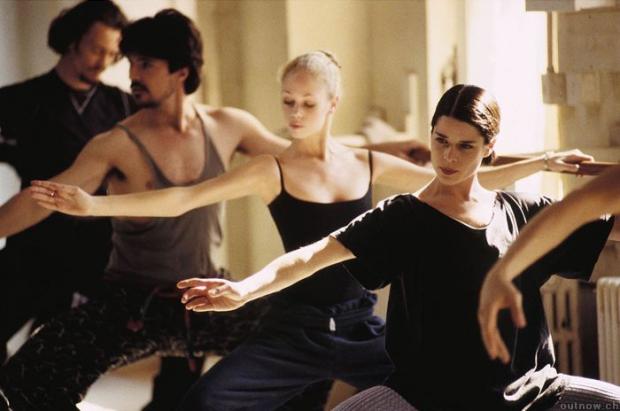
                          Image from The Company (Robert Altman, 2003)

                          Today, Film Studies For Free is thrilled to point you in the tremendous direction of the latest contents of Scope: An Online Journal of Film and Television Studies. There's lots to recommend in this issue but FSFF particularly enjoyed Katharina Lindner's article on the female dancer on film, along with numerous, wonderful book reviews and conference reports, all part of the fabulous and openly accessible service that Scope provides to the international film studies community.

                          Scope, Issue 20, June 211

                          Articles

                          Book Reviews

                          Film Reviews

                          Conference Reports

                          More about → New SCOPE: Chris Marker, Cult cinema, Dance on Film, 1970s Film Theory

                          The Art of Fugue: on Marguerite Duras's Film Aesthetics

                          Diposting oleh good reading on Selasa, 31 Agustus 2010

                          Excerpt from the opening sequence of India Song (Marguerite Duras, 1975)
                          The repetition of situations, events, memories, and words abounds in Duras's texts. This repetition seems to emphasize the changing, unstable aspect of memory and language and move the reader to question his or her own memory and examine the dynamics of forgetting. . . . memory is seen as volatile and impossible. [...] It is a remembering that destroys memory and leads to a new memory, which can replace the last only fleetingly and without substance [...]. [Carol Hoffman, Forgetting and Marguerite Duras (University of Colorado Press, 1991): 35-6] 
                          Impossible de parler de HIROSHIMA. Tout ce qu’on peut faire c’est de parler de l’impossibilité de parler de HIROSHIMA. / It is impossible to speak about Hiroshima. All one can do is to speak of the impossibility of speaking of Hiroshima [Marguerite Duras, Script of Hiroshima mon amour (Alain Resnais, 1960)]
                          Marguerite Duras s'avère savoir sans moi ce que j'enseigne / Marguerite Duras turns out to know what I teach without me [Jacques Lacan, "Hommage fait à Marguerite Duras du ravissement de Lol v. Stein," Ornicar? 34, Paris: Navarin, 1985]
                          The cinema of Marguerite Duras is characterized by the notion that a film is nothing but a highly complex mental construct, a universe where memories and senses are reorganized under subjective orders. In contrast to other filmmakers who probably share the same notion (Alain Resnais, for instance), Duras relies heavily on the power of sound and particularly the suggestive power of the human voice to provoke and promote an active participation of the spectator’s imaginative process.
                          [Dong Liang, 'Marguerite Duras's Aural World: A study of the mise-en-son of India Song', Music, Sound, and the Moving Image, Volume 1, Issue 2, Autumn 2007, pp. 123-139]
                          Duras’s spectators must play an essentially active and creative role and question the concepts of listening and looking, as well as the relationship between the two. [Wendy Everett, 'An Art of Fugue? The Polyphonic Cinema of Marguerite Duras', in Williams, J. (ed.), Revisioning Duras: Film, Race, Sex (Liverpool: Liverpool University Press, 2000), pp. 21-36,  33]
                          [W]e are perpetually forced to recognize that changing rhythms and contextual juxtapositions [in Duras's cinema] do not fulfill a narrative function, at least not in the accepted notion, but exist to create internal patterns or variations that themselves express the film’s themes, and gradually develop its potential meanings
                          [Wendy Everett, ‘Director as Composer: Marguerite Duras and the Music Analogy’, Literature Film Quarterly,  Vol. 26, no. 2, 1998, 124–129: 127]

                          Film Studies For Free has been pondering the films of Marguerite Duras a lot recently. This happens fairly often, its true (FSFF's author first alighted on and fell in love with Planète Duras during a year abroad in France at the tender age of 20).

                          But, this week its ponderings have particularly been provoked by catching up with an experimental feature-length film -- cinematically complex and ambitious on a Durasian scale, and with some notably similar fugue techniques and themes -- made by a former colleague and friend, which is about to begin a two week run at London's ICA (there's a Q and A with the director and others on September 1). Do catch it if you can.

                          Perestroika -- written, directed, edited and produced by film artist (and academic) Sarah Turner -- has already been shown at a number of key film festivals, and will also very shortly be making a critical splash as the chosen "Film of the Month" in Sight and Sound's October issue, with a long review by Chris Darke. In the meantime you can read a lot more about it here and at FSFF's little sister site Filmanalytical, too, where you can watch a short excerpt.

                          Today's links list may be relatively small, but it is perfectly formed with some extremely high quality and, delightfully, freely accessible studies of Duras's film aesthetics.


                          More about → The Art of Fugue: on Marguerite Duras's Film Aesthetics

                          The Chris Marker Issue of IMAGE [&] NARRATIVE

                          Diposting oleh good reading on Minggu, 24 Januari 2010


                          Image from Owls at Noon (Chris Marker, 2005)

                          Film Studies For Free can barely contain its excitement as it rushes you news of the latest IMAGE [&] NARRATIVE (Vol. 11, No. 4, 2010) - a special issue devoted to philosophically informed discussion of the work of Chris Marker.

                          The names of the esteemed contributors to the issue (Christa Blümlinger, Sarah Cooper, Matthias De Groof, Sylvain Dreyer, Sarah French, Adrian Martin, Susana S. Martins, and editor Peter Kravanja) provide a very clear guarantee to the reader of the extremely high quality of the work on offer here. So, there's nothing more to say, other than: enjoy! Direct links to their essays are given below, but be sure to visit the IMAGE [&] NARRATIVE website for some remaining (non-Marker-related) articles in this wonderful issue.
                          • 'The Imaginary in the Documentary Image: Chris Marker's Level Five', Christa Blümlinger AbstractPDF
                          • 'Montage, Militancy, Metaphysics: Chris Marker and André Bazin', Sarah Cooper Abstract PDF
                          • 'Statues Also Die - But Their Death is not the Final Word', Matthias De Groof Abstract PDF
                          • Autour de 1968, en France et ailleurs : Le Fond de l'air était rouge', Sylvain Dreyer Abstract PDF
                          • '“If they don’t see happiness in the picture at least they’ll see the black”: Chris Marker’s Sans Soleil and the Lyotardian Sublime', Sarah French Abstract PDF
                          • 'Crossing Chris: Some Markerian Affinities', Adrian Martin Abstract PDF
                          • 'Petit Cinéma of the World or the Mysteries of Chris Marker', Susana S. Martins Abstract PDF
                          More about → The Chris Marker Issue of IMAGE [&] NARRATIVE