Tampilkan postingan dengan label Classical Hollywood Cinema. Tampilkan semua postingan

Magnifying Mirror: On Barbara Stanwyck and Film Performance Studies

Diposting oleh good reading on Senin, 11 November 2013


Film Studies For Free proudly presents an entry on the wonderful work of American actress Barbara Stanwyck as well as on film performance studies more generally. Stanwyck's illustrious career began in the 1920s and spanned sixty years. During that period she starred in major films of many genres and worked with some of the most distinguished Hollywood directors. Writing on her work may provide, therefore, an excellent, indeed exemplary case for reflection on film critical methodologies in performance studies.

As well as the usual links to online scholarly work on these topics (scroll down for those), the entry presents, below, an interview with Andrew Klevan, Lecturer in Film Studies at the University of Oxford. Klevan discusses the rationale behind his recent book on Hollywood film star Barbara Stanwyck (London: BFI/Palgrave, 2013). He also talks about some of the issues that arise when film performance is the object of study, around intention and attribution of agency and value.

During the interview, which took place in October this year, Klevan read aloud an excerpt from his book, a reading which inspired, and formed the narration of, the above FSFF video on Stanwyck, MAGNIFYING MIRROR. Klevan also wrote a short statement about the video and about his collaboration with FSFF more generally, which you can also find below.


A Note by Andrew Klevan
I am grateful to
Film Studies For Free for highlighting my work, and I hope the expression of some nervousness will not be taken as ungracious. The problem of enlarging on rationale and method as I do in the interview is that, aside from risking accusations of self-importance and self-promotion, by simply stating matters which should, perhaps, remain implicit, one overstates the case, and raises expectations, especially with regard to, what we affectionately call, little books. My answers, drawing out many of the things I tried to do, may create the incorrect impression that the Barbara Stanwyck study is comprehensive and voluminous. (Even the use of expressions such as ‘moment-by-moment’ or ‘movement of meaning’ might suggest an exhaustive sequential tracking.) In fact, one of the compositional aims was to try, using the short form of the little book, to achieve a balance between elaboration and concentration, extraction and distillation. This partly reflects a similar balance achieved in the films and performances, and Catherine Grant’s fascinating video riff, ‘Magnifying Mirror’, which matches the film to my pre-existing text, captures some of this by looping a sequence and in doing so emphasises the moment’s compactness by way of repetition.

I am conscious that [fellow film scholar] E.A. Kaplan is a casualty, and it appears as if her comment on Stella Dallas is singled out where actually quite a few accounts are tested in the course of the study and the isolation is a consequence of uprooting. It is true that I take issue with her assessment, but this is a difference over an interpretation, not a charge against her work more generally, or the value of it. I feel that her account reduces, and overlooks an achievement of the film, but this is something that we are all prone to do. Indeed, much nervousness on my part again as the film returns, insistently, to probe my own description and interpretation – alas too late to make adjustments – but also some satisfaction as film and criticism are reunited. This image/speech track relationship struck me as quite different to a DVD commentary (which is limited by the real time of the film) and the narration of audio-visual criticism (which is conceived in relation to the handling of images). I got the sense of a new form of criticism, using audio-visual material, happily meeting an old form of criticism, using words, and not simply exemplifying the ‘close reading’, but enhancing and interrogating, and more generally revivifying (and magnifying). The iteration in Catherine’s video productively interacts with the distension of written representation. The collaboration with FSFF has illuminated for me the stimulating relationship between commentaries in different forms so that the book gets commented upon in an audio interview and in a video film which in turn gets commented upon in this web statement, allowing the different media to differently elucidate.
Andrew Klevan is Lecturer in Film Studies at the University of Oxford, UK. He is author of Disclosure of the Everyday: Undramatic Achievement in Narrative Film and Film Performance: From Achievement to Appreciation. He is the co-editor of The Language and Style of Film Criticism, and is on the editorial boards of MOVIE - A Journal of Film Criticism and Film-Philosophy Journal]

On Barbara Stanwyck

    On film performance


        More aboutMagnifying Mirror: On Barbara Stanwyck and Film Performance Studies

        Hard-Boiled! Studies of Raymond Chandler's Work on Screen

        Diposting oleh good reading on Minggu, 14 Oktober 2012

        Frame grab from The Big Sleep (Howard Hawks, 1946). Read Jonathan  Rosenbaum's essay on this film adaptation of Raymond Chandler's 1939 novel.

        Today, Film Studies For Free brings you the second of three posts devoted to online resources provided by the staff of the fantastic Film Studies department at Queen Mary, University of London. On this occasion, the resource is a two part video of an excellent, illustrated lecture by Adrian Wootton on the screen adaptations of Chandler's work, including ones the writer scripted himself.

        This time, FSFF adds value to the videos with its own presentation of a terribly hard-boiled list of links to online scholarly studies of Raymond Chandler's work and its screen adaptations.


        On December 3rd 2009, Adrian Wootton, then Chief Executive of the BFI (now CEO of Film London), visited Queen Mary, University of London, to give a talk on Raymond Chandler on screen.
        Click on the links below to access QuickTime video files of the event.


        Wootten 2 poster frame

        More aboutHard-Boiled! Studies of Raymond Chandler's Work on Screen

        Seven Great Film Studies PhD Theses from the University of Edinburgh

        Diposting oleh good reading on Jumat, 03 Februari 2012

        Framegrab from Jeux interdits/Forbidden Games (René Clément, 1952)
        The classically idyllic, carefree world of childhood would appear to be diametrically opposed to the horrors of war and world-wide conflict. However, throughout film history, filmmakers have continually turned to the figure of the child as a prism through which to examine the devastation caused by war.
        This thesis will investigate the representation of childhood experience of the Second World War across six fiction films: Roberto Rossellini’s Paisan (1946) and Germany Year Zero (1947), René Clément’s Forbidden Games (1952), Andrei Tarkovsky’s Ivan’s Childhood (1962), Jan Nemec’s Diamonds of the Night (1964) and Elem Klimov’s Come and See (1985). [Pasquale Iannone, Childhood and the Second World War in the European fiction film PhD Thesis, University of Edinburgh, 2011: 11; hyperlinks added by FSFF]
        Film Studies For Free went a-hunting at the research repository at the University of Edinburgh and found that seven great full-text PhD theses have been archived there.

        Each of these works of original research has a huge amount to offer any student of cinema, and so it's really great that their authors and their university have made them publicly available online.

        FSFF hopes its readers will join it in saluting them!
        More aboutSeven Great Film Studies PhD Theses from the University of Edinburgh

        Bitter Brilliance: Links to Nicholas Ray Scholarship and Criticism

        Diposting oleh good reading on Minggu, 04 September 2011


        If the cinema no longer existed, Nicholas Ray alone gives the impression of being capable of reinventing it, and what is more, of wanting to. While it is easy to imagine John Ford as an admiral, Robert Aldrich on Wall Street, Anthony Mann on the trail of Belliou la Fumée or Raoul Walsh as a latter-day Henry Morgan under Caribbean skies, it is difficult to see the director of Run For Cover doing anything but make films. A Logan or a Tashlin, for instance, might make good in the theatre or music-hall, Preminger as a novelist, Brooks as a school teacher, Cukor in advertising - but not Nicholas Ray. Were the cinema suddenly cease to exist, most directors would in no way be at a loss; Nicholas Ray would. After seeing Johnny Guitar or Rebel Without A Cause, one cannot but feel that here is something which exists only in the cinema, which would be nothing in a novel, the stage, or anywhere else, but which becomes fantastically beautiful on the screen. [Jean-Luc Godard, [On Nicholas Ray's Hot blood]', Cahiers du cinéma, 1957, cited by Sam Rohdie, 'Studies', Screening the Past, Issue 19, 2006]
        In the opening credit sequence of Nicholas Ray’s Rebel Without a Cause (1955), Jim Stark, played by James Dean, stumbles to the foreground of the wide, Cinemascope image and lays down to play with a miniature toy monkey. After winding it up and childishly watching it march and clap its cymbals, he paternally makes a bed for it out of assorted litter and puts it to sleep under a blanket of wrinkled paper. This brief moment not only provides immediate insight into Dean’s character, but it also foreshadows the entire story to come: young Jim’s paternal drive to ‘be a man,’ induced in part by a pathetically weak father figure, leads him to adopt Plato [Sal Mineo] as a younger sibling/child whom he can protect (like he wishes he was protected). In fact, Plato acts as a direct visual stand-in for Jim’s toy, as is clear from the latter’s attempt to give Plato his jacket in the police station moments after the opening sequence, a gesture that Plato would finally accept seconds before his death at the end of the film, when Jim would put him to rest—like his cherished toy that had run out of energy—by zipping up his jacket for the cold beyond. Jim’s own father surprisingly repeats this gesture by putting his jacket over his son’s shoulders in an inaugural act signaling his desire to protect his child from the gratuitous cruelty of the world. [Gabriel Rockhill, 'Modernism as a Misnomer: Godard’s Archeology of the Image', Journal of French and Francophone Philosophy - Revue de la philosophie française et de langue française, Vol XVIII, No 2 (2010) pp 107-129: 110-111]
        Today, inspired in part by the appearance yesterday of Serena Bramble's video tribute (above), Film Studies For Free collects snippets from and links to scholarship and critical writing on the films of Nicholas Ray.

        This year marks the centenary of Ray's birth. Interestingly, the years since are remarkably short on online and openly accessible scholarly studies of his work, but mightily longer, luckily, on some really excellent film critical work. The below list aims to link to the best and most interesting of both those categories, but if you know of great items missing from this selection, please feel free to tell FSFF about them in the comments. Thank you!


        Evan Meeker's video The Rebel Within uses experimental editing techniques "to probe Nicholas Ray's Rebel Without a Cause analyzing scenes and dialogue with the intention of drawing out hidden themes and character traits easily glanced over in the original."
        More aboutBitter Brilliance: Links to Nicholas Ray Scholarship and Criticism

        "Radical, readable": Links and studies in memory of Robert Sklar

        Diposting oleh good reading on Jumat, 08 Juli 2011

        How important are origins? [Robert Sklar, 'Cineaste's Early Years: The Quest for a Radical, Readable Film Criticism', Cineaste, Vol. 32 No.4 (Fall 2007)]
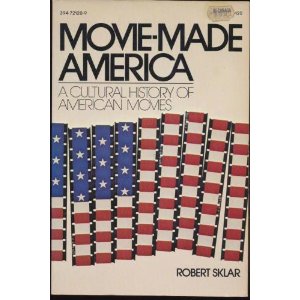
        What is remarkable is the way that American movies, through much of their span, have altered or challenged many of the values and doctrines of powerful social and cultural forces in American society, providing alternative ways of understanding the world. [Robert Sklar, Movie-Made America: A Cultural History of American Movies (New York, 1975)]
        Sklar’s most influential work, “Movie-Made America,” first came out over thirty years ago but remains one of the most important texts for the study of American cinema. (After all, he helped invent the field.) Its thesis, that American film culture owed much to the lower class and the struggles against capitalist interests rather than efforts to sustain them, echoed the egalitarian nature of Sklar’s writing: Although primarily an academic, he had the capacity to speak to movie lovers of all stripes. In doing so, he was essentially an activist, capable of making the inarguable case for taking movies seriously—not only as an art form, but a socio-economic force that helps us understand the world. [Eric Kohn, 'Robert Sklar, RIP', Screenrush at indieWIRE July 5, 2011 ]
        Robert Sklar's Movie-Made America (1975, Vintage) was a paradigm-shifting work for film in American studies. It revamped the intellectual (or highbrow) versus popular polarities in which filmic expression was celebrated or denigrated in discussions ofAmerican culture by such culture critics as Dwight MacDonald writing during the height of the Cold War or historians like Richard Pells a decade later who began to incorporate Hollywood activities within the intellectual and cultural landscapes they portrayed. Sklar maintained an interest in movies and ideology but located them within Hollywood as an institution of capital, of culture, of even the State.
             The publication of his book seemed to be part of a new wave of addressing the role of movies and Hollywood within American culture. [Lauren Rabinovitz, 'More Than Meets the Eye: Movies in American Studies', 2005 MAASA Presidential Symposium, p. 77]
        Discussing broad transformations in the history of American film, Robert Sklar suggests that, since the 1970s, historical memory has become the touchstone of a movie’s cultural power, replacing a ‘traditional rhetoric of myths and dreams’. For Sklar, the identification of a shift from ‘myth to memory’ in the rhetorical power of mainstream American film relates to a particular dissolution of the consensus that, until the 1970s, had underpinned American liberal ideologies in the postwar period. While speculative in nature, ideological schemas of this sort do have a certain use in identifying broad historical trends and patterns in the discursive propensities of popular cinema. Sklar is one of many critics who identify the 1970s as the origin of the contemporary ‘memory boom’ in American life and society. In a time when it is claimed that metanarratives of history and progress have been severely undermined, and when the past has become increasingly subject to cultural mediation, textual reconfiguration, and ideological contestation in the present, memory has developed a new discursive significance. In cinema, as in other modes of cultural practice, memory has become a powerful locus for the articulation of identity in the sphere of cultural imaginings. This has been levied in rhetorical terms – Sklar’s transition from the ‘myths and dreams’ of classical film to the ‘historical memory’ of more recent work – but it has also become figured in particular generic transformations and bound in regimes of industrial and institutional commercialism, such that movie memory itself has experienced a heightened cultural significance. [Paul Grainge, 'Introduction: memory and popular film', in Grainge (ed.), Memory and Popular Film (Manchester: Manchester University Press, 2003) citing Robert Sklar, Movie-Made America: A Cultural History of American Movies (New York: Vintage Books, 1994), p. 357].
        Many of Film Studies For Free's readers will already have heard of the very sad and untimely death this week of the influential U.S. film historian and critic Robert Sklar.

        Professor of Cinema Studies at Tisch School of the Arts, New York University, Sklar was the author of many books, including Movie-Made America: A Cultural History of American Movies (New York: Vintage, 1975; rev. 1994), City Boys: Cagney, Bogart, Garfield (Princeton, 1992) and A World History of Film" (2003). Sklar also worked as a contributing editor at Cineaste, writing many perceptive reviews. In 2007, he also penned an important and revealing study of that magazine’s early history, which featured in the 40th Anniversary issue. Sklar was co-editor (with Saverio Giovacchini) on a book set for publication later this year: Global Neorealism: The Transnational History of a Film Style.

        Sklar served on the selection committee of the New York Film Festival in the 1990s. As a member of the National Film Preservation Board since 1997, he helped choose the films to be included on the Library of Congress’s National Film Registry. He was President of the Society for Cinema Studies (now the Society for Cinema and Media Studies) from 1979 to 1981.

        Below, in a small tribute to the work of this unassuming but hugely important film scholar, FSFF has assembled a list of direct links to online, openly accessible writing by Sklar, as well as to tributes to him by his colleagues and students. Below those lists, there is a further gathering of links to a wide range of online film scholarship influenced or informed by his historical and historiographical work on American cinema.
          Online tributes:
          Significant online works influenced or informed by Sklar's Work:


            More about"Radical, readable": Links and studies in memory of Robert Sklar

            "An incarnation of the modern": In Memory of Miriam Bratu Hansen, 1949-2011

            Diposting oleh good reading on Minggu, 06 Februari 2011

            Last updated: May 13, 2012
            The cover of Miriam Hansen's last book. Published posthumously. [Image added on May 13, 2012]
            Hollywood cinema was perceived, not just in the United States but in modernizing capitals all over the world, as an incarnation of the modern. [...]
            American movies of the classical period offered something like the first global vernacular. If this vernacular had a transnational and translatable resonance it was not just because of its optimal mobilization of biologically hard-wired structures and universal narrative templates, but because this vernacular played a key role in mediating competing cultural discourses on modernity and modernization; because it articulated, brought into optical consciousness (to vary Benjamin), and disseminated a particular historical experience. [Miriam Hansen, “Fallen Women, Rising Stars, New Horizons: Shanghai Silent Film as Vernacular Modernism,” Film Quarterly 54.1 (Fall 2000): 10-22, 30]
            [Miriam] Hansen’s argument [about “vernacular modernisms”] is that early “classical” or studio cinemas are inextricably intertwined with the experience of modernization and modernity. While this argument, as she claims, is in and of itself not incredibly radical, her argument provides significant [additions to] three areas of film scholarship: it enlarges the discussion of modernism to [include] other media affected by the process of modernization, it intervenes in the binary between psychoanalytic and cognitive approaches to classical Hollywood cinema, and it [...] speaks to the question of Hollywood cinema’s early global hegemony during the 1920s-40s. In this last discussion, Hansen speaks of Hollywood’s flexibility in appropriating an amalgamation of diverse domestic interests in its inauguration of mass audience. [Kirsten Strayer, Ruins and Riots: Transnational Currents in Mexican Cinema, PhD Thesis, University of Pittsburgh 2009, p. 49]
            Miriam Hansen differentiates between the use of the terms “audience” and “spectator” not just as a theoretical or methodological distinction operative within viewer-oriented studies (as do Kuhn, Mayne, Staiger and others who posit the former as a “real” social collective and the latter as a hypothetical or ideal construct of the text); instead, Hansen argues that the emergence of the “spectator” (and concomitant suppression of the “audience” as such) is historically specific, marking a paradigm shift between early and later cinema (around 1909). [Melanie Nash, 'Introduction', Cinémas : revue d'études cinématographiques / Cinémas: Journal of Film Studies, vol. 14, n° 1, 2003, p. 7-19; citing Miriam Hansen, Babel and Babylon: Spectatorship in American Silent Film, Cambridge, Harvard University Press, 1991 (pp. 23-24), p. 18]
            The unprecedented acceleration of technological innovation and circulation have created conditions in which consciousness is more than ever inadequate to the state of technological development, its power to destroy and enslave human bodies, hearts, and minds. At the same time, new media such as video and the digital media have expanded the formal and material arsenal for imaginative practices and have opened up new modes of publicness that already enact a different, and potentially alternative, engagement with technology.
                This antinomic situation eludes the perspective of strictly media theory, especially in its ontological and teleological bent (for example, Paul Virilio, Friedrich Kittler, Norbert Bolz), to say nothing of popular pundits' techno-pessimism. It requires understanding the practices, both productive and receptive, of technology in increasingly overlapping yet fractured, unequal yet unpredictable public spheres. It urges us to resume Benjamin's concern for the conditions of apperception, sensorial affect, and cognition, experience and memory—in short, for a political ecology of the senses.
                For us—teachers, scholars, intellectuals—to engage on both sides of this antinomy, we need theory, and we need aesthetics. The current reinvention of the aesthetic in the humanities would do well to heed Benjamin's lesson. The question of the fate of art in the age of technological reproducibility still maps a heuristic—and historical—horizon that no serious effort to refocus the study of literature and other traditional arts can afford to ignore. At the very least, awareness of that horizon should guard the renewed attention to formal and stylistic questions against illusory attempts to revive artistic autonomy, as an enclave protected against technical mediation and commodification. [Miriam Hansen, 'Why Media Aesthetics', Critical Inquiry, Vol. 30, No. 2, 2004-5]
            When Film Studies For Free posted the above embedded video a week ago, in an entry on online film studies lectures at the University of Chicago, it couldn't have imagined the almost immediate and extremely sad circumstances in which it would be reposted. But word has come, via Tom Gunning and other film scholars, that Miriam Hansen, one of the true paradigm-shifters of our discipline, one of its most gifted historians and theorists, has passed away.

            Miriam Hansen was Ferdinand Schevill Distinguished Service Professor in the Humanities at the University of Chicago, where she also taught in the Department of English and the Committee on Cinema and Media Studies. Her publications include a book on Ezra Pound’s early poetics (1979) and Babel and Babylon: Spectatorship in American Silent Film (1991). She was completing a study entitled The Other Frankfurt School: Kracauer, Benjamin, and Adorno on Cinema, Mass Culture, and Modernity. Her next project was to be a book on the notion of cinema as vernacular modernism.

            Inspired by her lifelong study of the Frankfurt School, Hansen's work rethought cinema as a part of the public and counterpublic spheres, situating it within a larger discourse of popular culture, and thus opening up the essential study of such 'periphery texts' as fan magazines, gossip columns, movie reviews, and so on. But her development of the concept of vernacular modernism also completely set the scene for the field of world or transnational cinema studies; and her historical work on cinematic spectatorship and her highly original addressing of the sensual experiences of film and new media are likewise in the process of revolutionizing their field of study (as W.J. T. Mitchell argues in relation to 'Miriam Hansen’s urging that cinema and other media be regarded as a vernacular modernism in which new theoretical propositions might be articulated while the senses are being reeducated').

            It is hard to think, then, of anyone who has made a more significant contribution to Film Studies (and, latterly, new media studies), in the context of the Humanities as a whole, than she did.

            Film Studies For Free hopes that Hansen knew just how grateful we are for her research -- how changed we are by it -- as well as for her inspiring work as a teacher. Here is a link to a warm and touching tribute by one of Hansen's former students.

            Links to some of Hansen's work, as well as to some of the work it inspired, are given below. Further links, including ones to online tributes to her, will be added here as they come to FSFF's notice.

            Online Tributes to Miriam Hansen:

            Work by Miriam Hansen online:
            Other Scholars on aspects of Hansen's work:
                
              More about"An incarnation of the modern": In Memory of Miriam Bratu Hansen, 1949-2011

              New from BBC Archive: Hollywood Voices interviews with over 70 Hollywood stars

              Diposting oleh good reading on Senin, 20 Desember 2010

              Glenn Ford and Rita Hayworth in a publicity still for Gilda (Charles Vidor, 1946). Interviews with both actors can be found at the new BBC Archive Hollywood Voices collection.

              A star-struck Film Studies For Free has one more item of important news to rush you today. Just feast your eyes on the below release from the BBC Archive.There may be some geo-blocking outside of the UK, unfortunately, but do please check to see if you can download these magnificent resources.

              Hollywood Voices looks back at the Golden Age of American cinema with interviews with over 70 movie stars and film makers.

              Radio broadcasts by Boris Karloff, Katharine Hepburn, Bette Davis and Charlie Chaplin are joined by previously unreleased interviews with Harold Lloyd, Gregory Peck, Ginger Rogers, Gene Kelly and more. Plus - two galleries of photos show the moments when stars like Edward G Robinson, Judy Garland and Fred Astaire came to the BBC in London.

              Originally scheduled for release in January, we're really excited to be able to bring this collection to you now, in advance of a new film season from Radio 4. In fact, make sure you have a listen to the new Radio 4 collection of interviews, which is also now available
              More aboutNew from BBC Archive: Hollywood Voices interviews with over 70 Hollywood stars

              On the art (and ideology) of John Ford's films

              Diposting oleh good reading on Minggu, 10 Oktober 2010

              Henry Fonda as Abraham Lincoln in Young Mr. Lincoln (John Ford, 1939)
              Even if John Ford had not made his ten best movies (whichever they are), he'd still be the greatest. [Tag Gallagher]
              In Young Mr. Lincoln, John Ford achieves the perfection of his art. Never were his matter and his method more aptly fitted, and never were his tendencies toward sprawl and overemphasis more rigorously controlled. It is a masterpiece of concision in which every element in every shot, every ratio, every movement, every shift of viewpoint seems dense with significance, yet it breathes an air of casual improvisation. While its surfaces paint, with relaxed humor and effortless nostalgic charm, an imaginary antebellum America, it sustains an underlying note of somber apprehension, all the more powerful for being held in check.

              Ford finds a mood that avoids the clutter and ponderousness of most Hollywood history movies, a mood more of parable than of textbook chronicle. That preoccupation with history and its contradictions—the variance between actual human experience and the official version that will be constructed after the fact—that suffuses films as different as They Were Expendable (1945), Fort Apache (1948), and The Man Who Shot Liberty Valance (1962) resonates troublingly at the heart of this film, for all its apparent serenity. Nothing here is as uncomplicated as it seems designed to appear, which may be why the editors of Cahiers du cinéma, in a celebrated, if by now scarcely readable, special issue of 1970, brought the full force of their post-’68 Althusserian-Lacanian rhetoric to bear on the film in a scene-by-scene analysis, as if here the secret mechanisms of the American ideology itself might be decoded and exposed. In trying to pin down the meanings of Ford’s art, however, Cahiers du cinéma missed his mercurial—and, admittedly, sometimes infuriating––ability to be in two places at once. If Ford’s Lincoln exhibits at once a radiant sincerity and the devious subtlety of a trickster, he is to that extent the director’s mirror image. [Geoffrey O'Brien, 'Young Mr. Lincoln: Here in Waiting', The Criterion Collection, February 13, 2006]
              Cahiers du cinéma’s 1969 analysis of Young Mr. Lincoln (1939), reprinted in Screenin 1972 in its first English translation, introduced symptomatic reading to British feminist film critics such as Pam Cook and Claire Johnston. Louis Althusser (1968, trans. 1970: 28-9) coined the term “symptomatic reading,” an interpretive strategy that searches not only for the structural dominants in a text but most importantly, for absences and omissions that are an indication of what the dominant ideology seeks to repress, contain or marginalize. Reading against the grain operates under the assumption that the text comprises a hierarchy of discourses in which one discourse – patriarchal ideology – asserts its dominance over others. Nevertheless, tensions between the dominant ideology and subordinate discourses produce ideological contradictions that the popular film cannot mask nor reconcile, try as it might. [Aspasia Kotsopoulos, 'Reading against the grain revisited', from Jump Cut, Issue 44, 2001]
              While it is difficult to ascertain exactly how an ‘oblique’ analysis of film would proceed, the editors of Cahiers [du cinéma’s] essay on John Ford’s Young Mr Lincoln (1939) is a significant example of this type of criticism and stands as exemplary of the many important analyses of mainstream Hollywood films that were carried out in the pages of Cahiers and elsewhere. The analysis of Young Mr Lincoln is a close reading of this film, which belongs to the category that is in many ways the most difficult to endorse: films that remain within bourgeois ideology, but reveal its ambiguities and fissures (when subjected to a highly specialised mode of reading).The reading by the Editors of Cahiers uses principles of Marxism, semiology and credits Marxist and Freudian discourses, and includes fleeting references to Jean-Pierre Oudart, Althusser, Roland Barthes and Serge Daney, and Lacan. However, there is no sustained explanation as to precisely which principles drawn from these discourses they will deploy. While Peter Wollen, in his Afterword to the translation of the analysis of Young Mr Lincoln in Screen, declares that the text “owes its concepts to Jacques Lacan” [...], this text would seem to be exemplary of Žižek’s contention that a sustained and explicit consideration of Lacan was in fact missing from 60s and 70s film theory.
                   At first glance, therefore, the Young Mr Lincoln article might seem to exemplify a move towards Lacanian psychoanalysis. Furthermore, upon first glance, it appears to be a step towards a consideration of narrative content. As such, it might seem to undermine a contention of this thesis: that the content of popular film was systematically precluded by considerations of film and ideology during the 60s and 70s. In this article, the Editorial Collective treat the text of the film in many ways like a work of literature, analysing it sequence by sequence, with scarcely a mention of its materiality. It could be argued that here is an example of textual analysis that confounds the assertion that subject matter was neglected in favour of form and materiality in analyses of film and ideology. While an extensive examination of the content of Young Mr Lincoln, or signifié, to use the Editors’ turn of phrase, appears to consume the bulk of this article, it must be noted that it is the film’s form which is ostensibly the impetus for the discussion of its content. [Kate Greenwood, Confronting the limits: Renditions of the Real in the Edge of the Construct Film, PhD Thesis, The University of Adelaide, December 2006: 63-64]

              It's been a slightly quieter week than usual here at Film Studies For Free, as its voracious readers may have noticed.

              A good reason for that is that this blog's author has merrily begun a new university year, teaching ... (drum roll) ... Film Theory!

              This shiny, new, non-virtual, pedagogical order will continue to slow up FSFF's production a little, it's true, but it will also inspire the direction that some of its entries will take in the coming weeks and months.

              For example, as next week's teaching focus is John Ford's 1939 film Young Mr, Lincoln, and the ideological film readings that it inspired, or provoked, here's a little list of online and openly accessible scholarly books, articles and videos on the inspirational and/or provocative work of that very director.
              Video Essay by Kevin B. Lee on The Sun Shines Bright (1956, John Ford) and Gertrud (1964, Carl T. Dreyer) with commentary by Jonathan Rosenbaum. Part One of Two. Part of the Shooting Down Pictures project

              Video essay by Kevin B. Lee on Tobacco Road (1941, dir. John Ford), #905 (46) in the Shooting Down Pictures project.

              More aboutOn the art (and ideology) of John Ford's films