Home » Posts filed under overweight
Diposting oleh
good reading on Rabu, 01 Januari 2014
I'm happy to announce that we're releasing a free e-book titled
Why do We Gain Fat, and How do We Lose it? An Introduction to the Science of Body Fat, by Dan Pardi and myself. This is a slimmed-down version of the longer, fully referenced e-book we offer as part of the Ideal Weight Program. In it, we provide a succinct overview of the science of body fat gain and loss, and the evidence base for our program. It also contains a schematic that ties together the various concepts in visual form. You can download it from the Dan’s Plan site by
following this link to our program overview page.
Ideal Weight Program 2.0 Upgrades
Over the last year, Dan and I have been working hard to improve the Ideal Weight Program, both in response to user feedback and our own ideas for development. Here are some of the new features we offer in 2014:
- Four-week meal plans and shopping lists for the FLASH diet and the Simple Food Diet, as requested by Ideal Weight Program users. This is in addition to the recipes and cooking guides we already provide.
- The Protein Unit system. Research suggests there's an optimal amount of protein for appetite control and fat loss, depending on your height, weight, gender, and physical activity level. Our fat loss diets are high in protein, but how do you know you're getting the right amount? We've created a calculator that does it for you automatically, and explains how to apply your personalized Protein Unit value easily and intuitively using real food.
- Diet plates. These are visual guides to following our diets, based loosely on the intuitive USDA MyPlate design.
- Cheat sheets. Put these on your fridge to remind yourself of your diet and lifestyle guidelines, and daily protein unit goal.
- Updated guidance. We've refined a few things in the diet guidance documents.
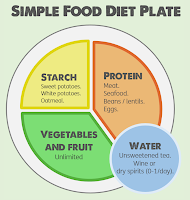
At a time of year when many people want to shed excess holiday pounds and start down a leaner, healthier path, we offer the
Ideal Weight Program 2.0. The program comes with a 30-day no-questions-asked refund policy so you can try it without risk. We think you'll love this program, but if it doesn't work for you, we're happy to refund your purchase price.
Financial disclosure: I receive a portion of the revenue from the sale of the Ideal Weight Program. I do not receive revenue from the sale of other products associated with Dan's Plan or the Ideal Weight Program (such as the Fitbit, cooking tools, and other programs).
Diposting oleh
good reading on Senin, 30 Desember 2013
The Claim: We Overeat Because Our Diet is Low in Vitamins and MineralsWe know that animals, including humans, seek certain properties of food. Humans are naturally attracted to food that's high in fat, sugar, starch, and protein, and tend to be less enthusiastic about low-calorie foods that don't have these properties, like vegetables (
1). Think cookies vs. plain carrots.
In certain cases, the human body is able to detect a nutritional need and take steps to correct it. For example, people who are placed on a calorie-restricted diet become hungry and are motivated to make up for the calorie shortfall (
2,
3). People who are placed on a low-protein diet crave protein and eat more of it after the restriction is lifted (
4). Humans and many other animals also crave and seek salt, which supplies the essential minerals sodium and chlorine, although today most of us eat much more of it than we need to. At certain times, we may crave something sweet or acidic, and pregnant women are well known to have specific food cravings and aversions, although explanations for this remain speculative. Research suggests that certain animals have the ability to correct mineral deficiencies by selecting foods rich in the missing mineral (
5).
These observations have led to a long-standing idea that the human body is able to detect vitamin and mineral (micronutrient) status and take steps to correct a deficit. This has led to the secondary idea that nutrient-poor food leads to overeating, as the body attempts to make up for low nutrient density by eating more food. In other words, we overeat because our food doesn't supply the micronutrients our bodies need, and eating a micronutrient-rich diet corrects this and allows us to eat less and lose body fat. These ideas are very intuitive, but intuition doesn't always get you very far in biology. Let's see how they hold up to scrutiny.
Read more »
More about → Does the Vitamin and Mineral Content of Food Influence Our Food Intake and Body Fatness?
Diposting oleh
good reading on Selasa, 10 Desember 2013
Obesity is strongly associated with metabolic alterations and negative health outcomes including diabetes, cardiovascular disease, and some types of cancer (
1,
2,
3,
4). Excess body fat is one of the primary causes of preventable health problems and mortality in the United States and many other affluent nations, ranking in importance with cigarette smoking and physical inactivity. Obesity is thought to contribute to disease
via the metabolic disturbances it causes, including excess glucose and lipids in the circulation, dysregulated hormone activity including insulin and leptin, and inflammatory effects. This immediately raises two questions:
- Does metabolically healthy obesity exist?
- If so, are metabolically healthy obese people at an elevated risk of disease and death?
Does metabolically healthy obesity exist?Read more »
Diposting oleh
good reading on Senin, 11 November 2013
Smarter Science of SlimJonathan Bailor recently released an interview we did a few months ago on the neurobiology of body fat regulation, and the implications for fat loss. It's a good overview of the regulation of food intake and body fatness by the brain. You can listen to it
here.
Super Human RadioCarl Lanore interviewed me about my lab's work on hypothalamic inflammation and obesity. I'm currently wrapping up a postdoctoral fellowship with Dr. Michael Schwartz at the University of Washington, and the interview touches on our recent review paper "
Hypothalamic Inflammation: Marker or Mechanism of Obesity Pathogenesis?" Dan Pardi and I are frequent guests on Carl's show and I'm always impressed by how well Carl prepares prior to the interview. You can listen to the interview
here.
The Reality Check podcastPat Roach of the
Reality Check podcast interviewed me about the scientific validity of the "carbohydrate-insulin hypothesis" of obesity. The Reality Check podcast "explores a wide range of controversies and curiosities using science and critical thinking", and a dash of humor. This one should be very informative for people who aren't sure what to believe and want a deeper perspective on the science of insulin and body weight regulation. You can listen to it
here.
Obesity Society conferenceNext Thursday 11/9, I'll be speaking at the
2013 Obesity Society conference in Atlanta. My talk is titled "The Glial Response to Obesity is Reversible", and it will be about my work on the reversibility of obesity-associated hypothalamic neuropathology in mice. My talk will be part of the session "Neuronal Control of Satiety" between 3:00 and 4:30, specific time pending. See you there!
More about → Recent and Upcoming Appearances
Diposting oleh
good reading on Rabu, 09 Oktober 2013
Evidence is steadily accumulating that insufficient sleep increases the risk of obesity and undermines fat loss efforts. Short sleep duration is one of the most significant risk factors for obesity (
1), and several potential mechanisms have been identified, including increased hunger, increased interest in calorie-dense highly palatable food, reduced drive to exercise, and alterations in hormones that influence appetite and body fatness. Dan Pardi presented his research at AHS13 showing that sleep restriction reduces willpower to make healthy choices about food.
We also know that genetics has an outsized influence on obesity risk, accounting for about 70 percent of the variability in body fatness between people in affluent nations (
2). I have argued that "fat genes" don't directly lead to obesity, but they do determine who is susceptible to a fattening environment and who isn't (
3). I recently revisited a 2010 paper published in the journal Sleep by University of Washington researchers that supports this idea (
4).
Read more »
Diposting oleh
good reading on Senin, 23 September 2013
My friend Pedro Bastos graciously invited me to speak at a conference he organized in Lisbon on October 5 titled "Food, Nutrition and the Prevention of Chronic Diseases". I will give two talks:
- "Ancestral Health: What is Our Human Potential?" This talk will explore the health of non-industrial cultures in an effort to understand how much of our modern chronic disease burden is preventable, and it will briefly touch on one major aspect of non-industrial life that may protect against the "diseases of civilization". This presentation will focus on age-adjusted data from high quality studies.
- "Why Do We Overeat: a Neurobiological Perspective." This talk will attempt to explain why most of us consume more calories than we need to maintain weight-- a phenomenon that is a central cause of morbidity and mortality in the modern world. It will touch on some of the brain mechanisms involved in ingestive behavior, and outline a framework to explain why these mechanisms are often maladaptive in today's environment.
Pedro will speak about dairy consumption, vitamin D, and chronic disease.
The conference is targeted to health professionals and students of nutrition, however it's open to anyone who is interested in these topics. It's sponsored by
NutriScience, a Portuguese nutrition education and consulting company. Sadly, I don't speak Portuguese, so my talks will be in English.
Access the full program, and register for the conference, using the links below:
Diposting oleh
good reading on Senin, 02 September 2013
[Note: in previous versions, I mixed up "LGI" and "HGI" terms in a couple of spots. These are now corrected. Thanks to readers for pointing them out.]
Recently, a new study was published that triggered an avalanche of media reports suggesting that refined carbohydrate may be addictive:
Refined Carbs May Trigger Food AddictionRefined Carbs May Trigger Food AddictionsCan You be Addicted to Carbs?etc.
This makes for attention-grabbing headlines, but in fact the study had virtually nothing to do with food addiction. The study made no attempt to measure addictive behavior related to refined carbohydrate or any other food, nor did it aim to do so.
So what did the study actually find, why is it being extrapolated to food addiction, and is this a reasonable extrapolation? Answering these questions dredges up a number of interesting scientific points, some of which undermine popular notions of what determines eating behavior.
Read more »
Diposting oleh
good reading on Senin, 26 Agustus 2013
Now that the concept of cold training for cold adaptation and fat loss has received scientific support, I've been thinking more about how to apply it. A number of people have been practicing cold training for a long time, using various methods, most of which haven't been scientifically validated. That doesn't mean the methods don't work (some of them probably do), but I don't know how far we can generalize individual results prior to seeing controlled studies.
The studies that were published two weeks ago used prolonged, mild cold exposure (60-63 F air) to achieve cold adaptation and fat loss (
1,
2). We still don't know whether or not we would see the same outcome from short, intense cold exposure such as a cold shower or brief cold water plunge. Also, the fat loss that occurred was modest (5%), and the subjects started off lean rather than overweight. Normally, overweight people lose more fat than lean people given the same fat loss intervention, but this possibility remains untested. So the current research leaves a lot of stones unturned, some of which are directly relevant to popular cold training concepts.
In my last post on brown fat, I mentioned that we already know a lot about how brown fat activity is regulated, and I touched briefly on a few key points. As is often the case, understanding the underlying biology provides clues that may help us train more effectively. Let's see what the biology has to say.
Biology of Temperature RegulationRead more »
Diposting oleh
good reading on Selasa, 13 Agustus 2013
For those who are attending the Ancestral Health Symposium this year, my talk will be at 9:00 AM on Saturday. The title is "Insulin and Obesity: Reconciling Conflicting Evidence", and it will focus on the following two questions:
- Does elevated insulin cause obesity; does obesity cause elevated insulin; or both?
- Is there a unifying hypothesis that's able to explain all of the seemingly conflicting evidence cited by each side of the debate?
I'll approach the matter in true scientific fashion: stating hypotheses, making rational predictions based on those hypotheses, and seeing how well the evidence matches the predictions. I'll explore the evidence in a way that has never been done before (to my knowledge), even on this blog.
Why am I giving this talk? Two reasons. First, it's an important question that has implications for the prevention and treatment of obesity, and it has received a lot of interest in the ancestral health community and to some extent among obesity researchers. Second, I study the mechanisms of obesity professionally, I'm wrapping up a postdoc in a lab that has focused on the role of insulin in body fatness (lab of Dr. Michael W. Schwartz), and I've thought about this question a lot over the years-- so I'm in a good position to speak about it.
The talk will be accessible and informative to almost all knowledge levels, including researchers, physicians, and anyone who knows a little bit about insulin. I'll cover most of the basics as we go. I guarantee you'll learn something, whatever your knowledge level.
Diposting oleh
good reading on Minggu, 28 Juli 2013
Non-shivering thermogenesis is the process by which the body generates extra heat without shivering. Shivering is a way for the body to use muscular contractions to generate heat, but non-shivering thermogenesis uses a completely different mechanism to accomplish the same goal: a specialized fat-burning tissue called
brown fat. Brown fat is brown rather than white because it's packed with mitochondria, the power plants of the cell. Under cold conditions, these mitochondria are activated, using a specialized molecular mechanism called uncoupling* to generate heat.
The mechanism of brown fat activation has been worked out fairly well in rodents, which rely heavily on non-shivering thermogenesis due to their small body size. Specialized areas of the hypothalamus in the brain sense body temperature (through sensors in the brain and body), body energy status (by measuring leptin and satiety signals), stress level, and probably other factors, and integrate this information to set brown fat activity. The hypothalamus does this by acting through the sympathetic nervous system, which heavily innervates brown fat. As an aside, this process works basically the same in humans, as far as we currently know. Those who claim that rodent models are irrelevant to humans are completely full of hot air**, as the high degree of conservation of the hypothalamus over 75 million years of evolution demonstrates.
Two new studies concurrently published in the
Journal of Clinical Investigation last week demonstrate what I've suspected for a long time: brown fat can be 'trained' by cold exposure to be more active, and its activation by cold can reduce body fatness.
Read more »
More about → Brown Fat: It's a Big Deal
Diposting oleh
good reading on Selasa, 16 Juli 2013
Genetics Loads the Gun, Environment Pulls the Trigger
Thanks to a WHS reader* for reminding me of the above quote by Dr. Francis Collins, director of the US National Institutes of Health**. This is a concept that helps reconcile the following two seemingly contradictory observations:
- Roughly 70 percent of obesity risk is genetically inherited, leaving only 30 percent of risk to environmental factors such as diet and lifestyle.
- Diet and lifestyle have a large impact on obesity risk. The prevalence of obesity has tripled in the last 30 years, and the prevalence of extreme obesity has increased by almost 10-fold. This is presumably not enough time for genetic changes to account for it.
More about → The Genetics of Obesity, Part III
Diposting oleh
good reading on Selasa, 02 Juli 2013
Rodents Lead the WayThe study of obesity genetics dates back more than half a century. In 1949, researchers at the Jackson Laboratories identified a remarkably fat mouse, which they determined carried a spontaneous mutation in an unidentified gene. They named this the "obese" (
ob/ob) mouse. Over the next few decades, researchers identified several other genetically obese mice with spontaneous mutations, including diabetic (
db/db) mice, "agouti" (
Avy) mice, and "Zucker" (
fa/fa) rats.
At the time of discovery, no one knew where the mutations resided in the genome. All they knew is that the mutations were in single genes, and they resulted in extreme obesity. Researchers recognized this as a huge opportunity to learn something important about the regulation of body fatness in an unbiased way. Unbiased because these mutations could be identified with no prior knowledge about their function, therefore the investigators' pre-existing beliefs about the mechanisms of body fat regulation could have no impact on what they learned. Many different research groups tried to pin down the underlying source of dysfunction: some thought it was elevated insulin and changes in adipose tissue metabolism, others thought it was elevated cortisol, and a variety of other hypotheses.
Read more »
More about → The Genetics of Obesity, Part II
Diposting oleh
good reading on Senin, 24 Juni 2013
Choosing the Right Parents: the Best Way to Stay Lean?In 1990, Dr. Claude Bouchard and colleagues published a simple but fascinating study demonstrating the importance of genetics in body fatness (
1). They took advantage of one of the most useful tools in human genetics: identical twins. This is what happens when a single fertilized egg generates two embryos
in utero and two genetically identical humans are born from the same womb. By comparing identical twins to other people who are not genetically identical (e.g., non-identical twins), we can quantify the impact of genes
vs. environment on individual characteristics (
2).
Read more »
More about → The Genetics of Obesity, Part I
Diposting oleh
good reading on Selasa, 07 Mei 2013
I recently read an interesting review paper by Dr. Edmund T. Rolls titled "Taste, olfactory and food texture reward processing in the brain and the control of appetite" that I'll discuss in this post (
1). Dr. Rolls is a prolific neuroscience researcher at Oxford who focuses on "the brain mechanisms of perception, memory, emotion and feeding, and thus of perceptual, memory, emotional and appetite disorders." His website is
here.
The first half of the paper is technical and discusses some of Dr. Rolls' findings on how specific brain areas process sensory and reward information, and how individual neurons can integrate multiple sensory signals during this process. I recommend reading it if you have the background and interest, but I'm not going to cover it here. The second half of the paper is an attempt to explain the obesity epidemic based on what he knows about the brain and other aspects of human biology.
Read more »
Diposting oleh
good reading on Kamis, 02 Mei 2013
The 2013 Ancestral Health Symposium will be held in Atlanta, GA, August 14-17. Last year was a great conference, and I look forward to more informative talks and networking. Tickets go fast, so
reserve yours now if you plan to attend!
This year, I'll be speaking on insulin and obesity. My talk will be titled "
Insulin and Obesity: Reconciling Conflicting Evidence". In this talk, I'll present the evidence for and against the idea that elevated insulin contributes to the development of obesity. One hypothesis states that elevated insulin contributes to obesity, while the other states that elevated insulin is caused by obesity and does not contribute to it. Both sides of the debate present evidence that appears compelling, and it often seems like each side is talking past the other rather than trying to incorporate
all of the evidence into a larger, more powerful model.
There's a lot evidence that can be brought to bear on this question, but much of it hasn't reached the public yet. I'll explore a broad swath of evidence from clinical case studies, observational studies, controlled trials, animal research, physiology, and cell biology to test the two competing hypotheses and outline a model that can explain all of the seemingly conflicting data. Much of this information hasn't appeared on this blog. My goal is to put together a talk that will be informative to a researcher but also accessible to an informed layperson.
On a separate note, my AHS12 talk "
Digestive Health, Inflammation and the Metabolic Syndrome" has not been posted online because the video recording of my talk has mysteriously disappeared. I think many WHS readers would be interested in the talk, since it covers research on the important and interdependent influence of gut health, inflammation, and psychological stress on the metabolic syndrome (the quintessential modern metabolic disorder). I'm going to try to find time to make a narrated slideshow so I can post it on YouTube.
Diposting oleh
good reading on Minggu, 28 April 2013
Let's kick off this post with a quote from a 2001 review paper (
1):
Increased variety in the food supply may contribute to the development and maintenance of obesity. Thirty-nine studies examining dietary variety, energy intake, and body composition are reviewed. Animal and human studies show that food consumption increases when there is more variety in a meal or diet and that greater dietary variety is associated with increased body weight and fat.
This may seem counterintuitive, since variety in the diet is generally seen as a good thing. In some ways, it is a good thing, however in this post we'll see that it can have a downside.
Read more »
Diposting oleh
good reading on Senin, 22 April 2013
Michael Moss is a Pulitzer prize-winning journalist who has made a career writing about the US food system. In his latest book,
Salt, Sugar, Fat: How the Food Giants Hooked Us, he attempts to explain how the processed food industry has been so successful at increasing its control over US "stomach share". Although the book doesn't focus on the obesity epidemic, the relevance is obvious.
Salt, Sugar, Fat is required reading for anyone who wants to understand why obesity is becoming more common in the US and throughout the world.
Read more »
Diposting oleh
good reading on Selasa, 02 April 2013
Glucagon is a hormone that plays an important role in blood glucose control. Like insulin, it's secreted by the pancreas, though it's secreted by a different cell population than insulin (alpha vs. beta cells). In some ways, glucagon opposes insulin. However, the role of glucagon in metabolism is frequently misunderstood in diet-health circles.
The liver normally stores glucose in the form of glycogen and releases it into the bloodstream as needed. It can also manufacture glucose from glycerol, lactate, and certain amino acids. Glucagon's main job is to keep blood glucose from dipping too low by making sure the liver releases enough glucose. There are a few situations where this is particularly important:
Read more »
Diposting oleh
good reading on Minggu, 24 Maret 2013
Last week, I attended a Keystone conference, "Neuronal Control of Appetite, Metabolism and Weight", in Banff. Keystone conferences are small, focused meetings that tend to attract high quality science. This particular conference centered around my own professional research interests, and it was incredibly informative. This post is a summary of some of the most salient points.
Rapid Pace of Scientific ProgressRead more »
Diposting oleh
good reading on Selasa, 19 Februari 2013
I recently revisited a really cool paper published in the Lancet in 2009 on body fatness, biomarkers, health, and mortality (
1). It's a meta-analysis that compiled body mass index (BMI) data from nearly 900,000 individual people, and related it to circulating lipids and various health outcomes. This is one of the most authoritative papers on the subject.
Read more »


