Music to the Eyes: Film Music Essays and Resources Online

Diposting oleh good reading on Senin, 16 Maret 2009

Film Studies For Free silently but sonorously brings you its list of links to high-quality and freely accessible online scholarly writings pertaining to music, sound, film, video, and television (last updated 19 May 2009).
Further essential resources may be found at FilmSound.Org, SonicObjects and USC Thornton Film Composers Know the Score (YouTube video).
More aboutMusic to the Eyes: Film Music Essays and Resources Online

Paleopathology at the Origins of Agriculture

Diposting oleh good reading on Minggu, 15 Maret 2009

In April of 1982, archaeologists from around the globe converged on Plattsburgh, New York for a research symposium. Their goal:
...[to use] data from human skeletal analysis and paleopathology [the study of ancient diseases] to measure the impact on human health of the Neolithic Revolution and antecedent changes in prehistoric hunter-gatherer food economies. The symposium developed out of our perception that many widely debated theories about the origins of agriculture had testable but untested implications concerning human health and nutrition and our belief that recent advances in techniques of skeletal analysis, and the recent explosive increase in data available in this field, permitted valid tests of many of these propositions.
In other words, they got together to see what happened to human health as populations adopted agriculture. They were kind enough to publish the data presented at the symposium in the book Paleopathology at the Origins of Agriculture, edited by the erudite Drs. Mark Nathan Cohen and George J. Armelagos. It appears to be out of print, but luckily I have access to an excellent university library.

There are some major limitations to studying human health by looking at bones. The most obvious is that any soft tissue pathology will have been erased by time. Nevertheless, you can learn a lot from a skeleton. Here are the main health indicators discussed in the book:
  • Mortality. Archaeologists are able to judge a person's approximate age at death, and if the number of skeletons is large enough, they can paint a rough picture of the life expectancy and infant mortality of a population.
  • General growth. Total height, bone thickness, dental crowding, and pelvic and skull shape are all indicators of relative nutrition and health. This is particularly true in a genetically stable population. Pelvic depth is sensitive to nutrition and determines the size of the birth canal in women.
  • Episodic stress. Bones and teeth carry markers of temporary "stress", most often due to starvation or malnutrition. Enamel hypoplasia, horizontal bands of thinned enamel on the teeth, is probably the most reliable marker. Harris lines, bands of increased density in long bones that may be caused by temporary growth arrest, are another type.
  • Porotic hyperostosis and cribra orbitalia. These are both skull deformities that are caused by iron deficiency anemia, and are rather creepy to look at. They're typically caused by malnutrition, but can also result from parasites.
  • Periosteal reactions. These are bone lesions resulting from infections.
  • Physical trauma, such as fractures.
  • Degenerative bone conditions, such as arthritis.
  • Isotopes and trace elements. These can sometimes yield information about the nutritional status, diet composition and diet quality of populations.
  • Dental pathology. My favorite! This category includes cavities, periodontal disease, missing teeth, abscesses, tooth wear, and excessive dental plaque.
The book presents data from 19 regions of the globe, representing Africa, Asia, the Middle East, Europe, South America, with a particular focus on North America. I'll kick things off with a fairly representative description of health in the upper Paleolithic in the Eastern Mediterranean. The term "Paleolithic" refers to the period from the invention of stone tools by hominids 2.5 million years ago, to the invention of agriculture roughly 10,000 years ago. The upper Paleolithic lasted from about 40,000 to 10,000 years ago. From page 59:
In Upper Paleolithic times nutritional health was excellent. The evidence consists of extremely tall stature from plentiful calories and protein (and some microevolutionary selection?); maximum skull base height from plentiful protein, vitamin D, and sunlight in early childhood; and very good teeth and large pelvic depth from adequate protein and vitamins in later childhood and adolescence...
Adult longevity, at 35 years for males and 30 years for females, implies fair to good general health...
There is no clear evidence for any endemic disease.
The level of skeletal (including cranial and pelvic) development Paleolithic groups exhibited has remained unmatched throughout the history of agriculture. There may be exceptions but the trend is clear. Cranial capacity was 11% higher in the upper Paleolithic. You can see the pelvic data in this table taken from Paleopathology at the Origins of Agriculture.

There's so much information in this book, the best I can do is quote pieces of the editor's summary and add a few remarks of my own. One of the most interesting things I learned from the book is that the diet of many hunter-gatherer groups changed at the end of the upper Paleolithic, foreshadowing the shift to agriculture. From pages 566-568:
During the upper Paleolithic stage, subsistence seems focused on relatively easily available foods of high nutritional value, such as large herd animals and migratory fish. Some plant foods seem to have been eaten, but they appear not to have been quantitatively important in the diet. Storage of foods appears early in many sequences, even during the Paleolithic, apparently to save seasonal surpluses for consumption during seasons of low productivity.

As hunting and gathering economies evolve during the Mesolithic [period of transition between hunting/gathering and agriculture], subsistence is expanded by exploitation of increasing numbers of species and by increasingly heavy exploitation of the more abundant and productive plant species. The inclusion of significant amounts of plant food in prehistoric diets seems to correlate with increased use of food processing tools, apparently to improve their taste and digestibility. As [Dr. Mark Nathan] Cohen suggests, there is an increasing focus through time on a few starchy plants of high productivity and storability. This process of subsistence intensification occurs even in regions where native agriculture never developed. In California, for example, as hunting-gathering populations grew, subsistence changed from an early pattern of reliance on game and varied plant resources to to one with increasing emphasis on collection of a few species of starchy seeds and nuts.

...As [Dr. Cohen] predicts, evolutionary change in prehistoric subsistence has moved in the direction of higher carrying capacity foods, not toward foods of higher-quality nutrition or greater reliability. Early nonagricultural diets appear to have been high in minerals, protein, vitamins, and trace nutrients, but relatively low in starch. In the development toward agriculture there is a growing emphasis on starchy, highly caloric food of high productivity and storability, changes that are not favorable to nutritional quality but that would have acted to increase carrying capacity, as Cohen's theory suggests.
Very interesting.

One of the interesting things I learned from the book is that Mesolithic populations, groups that were halfway between farming and hunting-gathering, were generally as healthy as hunter-gatherers:
...it seems clear that seasonal and periodic physiological stress regularly affected most prehistoric hunting-gathering populations, as evidenced by the presence of enamel hypoplasias and Harris lines. What also seems clear is that severe and chronic stress, with high frequency of hypoplasias, infectious disease lesions, pathologies related to iron-deficiency anemia, and high mortality rates, is not characteristic of these early populations. There is no evidence of frequent, severe malnutrition, so the diet must have been adequate in calories and other nutrients most of the time. During the Mesolithic, the proportion of starch in the diet rose, to judge from the increased occurrence of certain dental diseases [with exceptions to be noted later], but not enough to create an impoverished diet... There is a possible slight tendency for Paleolithic people to be healthier and taller than Mesolithic people, but there is no apparent trend toward increasing physiological stress during the mesolithic.
Cultures that adopted intensive agriculture typically showed a marked decline in health indicators. This is particularly true of dental health, which usually became quite poor.
Stress, however, does not seem to have become common and widespread until after the development of high degrees of sedentism, population density, and reliance on intensive agriculture. At this stage in all regions the incidence of physiological stress increases greatly, and average mortality rates increase appreciably. Most of these agricultural populations have high frequencies of porotic hyperostosis and cribra orbitalia, and there is a substantial increase in the number and severity of enamel hypoplasias and pathologies associated with infectious disease. Stature in many populations appears to have been considerably lower than would be expected if genetically-determined maxima had been reached, which suggests that the growth arrests documented by pathologies were causing stunting... Incidence of carbohydrate-related tooth disease increases, apparently because subsistence by this time is characterized by a heavy emphasis on a few starchy food crops.
Infectious disease increased upon agricultural intensification:
Most [studies] conclude that infection was a more common and more serious problem for farmers than for their hunting and gathering forebears; and most suggest that this resulted from some combination of increasing sedentism, larger population aggregates, and the well-established synergism between infection and malnutrition.
There are some apparent exceptions to the trend of declining health with the adoption of intensive agriculture. In my observation, they fall into two general categories. In the first, health improves upon the transition to agriculture because the hunter-gatherer population was unhealthy to begin with. This is due to living in a marginal environment or eating a diet with a high proportion of wild plant seeds. In the second category, the culture adopted rice. Rice is associated with less of a decline in health, and in some cases an increase in overall health, than other grains such as wheat and corn. In chapter 21 of the book Ancient Health: Bioarchaeological Interpretations of the Human Past, Drs. Michelle T Douglas and Michael Pietrusewsky state that "rice appears to be less cariogenic [cavity-promoting] than other grains such as maize [corn]."

One pathology that seems to have decreased with the adoption of agriculture is arthritis. The authors speculate that it may have more to do with strenuous activity than other aspects of the lifestyle such as diet. Another interpretation is that the hunter-gatherers appeared to have a higher arthritis rate because of their longer lifespans:
The arthritis data are also complicated by the fact that the hunter-gatherers discussed commonly displayed higher average ages at death than did the farming populations from the same region. The hunter-gatherers would therefore be expected to display more arthritis as a function of age even if their workloads were comparable [to farmers].
In any case, it appears arthritis is normal for human beings and not a modern degenerative disease.

And the final word:
Taken as a whole, these indicators fairly clearly suggest an overall decline in the quality-- and probably in the length-- of human life associated with the adoption of agriculture.
More aboutPaleopathology at the Origins of Agriculture

GIVE ME A (SPRING) BREAK CUPCAKE

Diposting oleh good reading on Jumat, 13 Maret 2009

Oh how I deserve a (spring cupcake) break!
I've stuck to my running every night. Yah. you heard it: running every night at 10pm.

As you can see from my lack of posts, prior to Spring Break I had huge stacks of marking to plough through. That coupled with the running nightly and I wasn't in any mood to bake. I just wanted to sleep.

Though night time isn't the ideal time to run because of the huge adrenalin rush prior to going to bed, I'm sufficiently exhausted from the day that when my head hits my ergonomically designed memory foam pillow, I'm out for the count!
Not that I'm rationalizing eating a treat, but I've actually lost about 7 pounds just with the addition of all this running. It's not a lot of running, mind you. I can only afford 20 minutes a day, but I've been increasing my speed and I'll keep pushing myself by either doing that or increasing the incline on my treadmill.

With the running and the low-carb/refined foods restriction, I think I can allow myself a wee chocolate cupcake. I made a huge batch of tiny cupcakes and regular-sized cupcakes. Of course, I indulged in only one mini one :)

I brought the tray of cupcakes to school for my colleagues because I thought we needed a treat for the tough few weeks leading up to report cards. Heck, we sure deserved it.

here's the tray of cupcakes: note the mini ones...they're only a mouthful; less than half the size of the regular-sized cupcakes

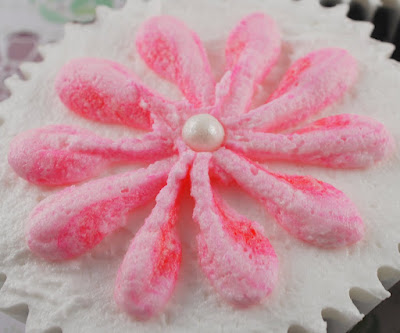
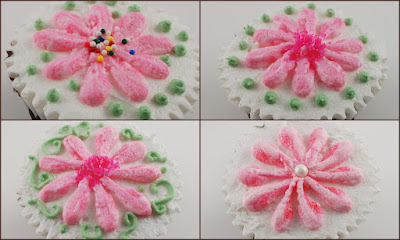
for pink gerberas, I used a 103 Wilton tip and plopped a dragee in the centre.

the buttercream frosting was tinted pink, but I intentionally didn't mix the colouring in thoroughly because I wanted a variegated look to the petals.

since I bake at night, I soon lost motivation to complete the decorations on the cupcakes and instead of finishing the gerberas with green leaves and vines, I decided to keep it simple ;P

The cupcake recipe I used was my favourite Barefoot Contessa chocolate layer cake recipe; but I adapted it for cupcakes instead. I reduced the baking time. Then I used the Wilton buttercream flavoured with almond extract. It's easy to pipe with and holds up well.

More aboutGIVE ME A (SPRING) BREAK CUPCAKE

Drop Cookies

Diposting oleh good reading on Kamis, 12 Maret 2009

It's becoming apparent that my elder son is displaying some signs that he is undergoing a growth spurt lately. I feel that he has grown so much taller and the most obvious tell-tale signs are, he has increased his meal portions, and during the late afternoons, he will start looking around in the kitchen for food.

I bake cookies only occasionally as I find them far too fattening. Since my boy has been asking for Chipsmore, Tim Tam and Oreos more frequently than usual, I've decided that it's time that I start making homemade cookies as a routine. At least I know what goes into the cookies I made, than to have him snack on commercial biscuits which are usually very high in fat and sugar content.

So, here's the first batch of cookies I tried...they are none other than the familiar Chocolate Chip Cookies, originally called Toll House cookies. These must be one of the simplest form of cookies, as what all baking books will tell you, they are also know as Drop cookies. They are so called as the cookie dough is so soft that it drops off the spoon and onto the baking sheet. Drop cookies are mainly made by the Creaming method...where you beat butter and sugar till the mixture turn pale and fluffy. Eggs are then added in followed by flour and any other flavourings such as chocolate chips, nuts or raisins. It's pretty simple and straight forward. However, there are still a couple of things to look out for...besides bringing the butter to room temperature (take it out from the fridge and leave it at the counter for about 30mins); the eggs have to be at room temperature too. The butter mixture tends to curdle when eggs are added, especially if they are not brought to room temperature. To prevent curdling, it is always a good practice to add the eggs a little at a time (I do it a teaspoon at a time, I have a little helper who is always eager to give a helping hand whenever he sees me busy with butter, flour and eggs), and beat well with each addition. If the mixture does curdles, just add in 1 tablespoon of the flour before adding more eggs. To make sure the cookies do not spread too much, you can always chill the dough in the fridge before baking. I didn't have problem with these cookies though.

Another good thing about making these drop cookies is that you don't even need an electric mixer. A wooden spoon can complete the task, although it does require some arm power when you first beat the butter and sugar together. Let the machine do the job if you don't want to develop huge biceps ;)


As usual I seek my kid's opinion on what kind of cookies he would prefer, and without thinking, he requested for chocolate chips cookies, and he likes them to be crunchy, no chewy cookies for him. I went through 3 cookie bibles and almost gave up before I saw this basic chocolate chip cookies from this book The Cookie and Biscuit Bible. It is so basic that the recipe is found under the introductory pages instead of the rest of the chapters, I'm so glad that I didn't let it slipped away.

These cookies taste fabulous. They are the best chocolate chip cookies I have made. I'll have to attribute the rich flavour to the 3 main ingredients I have used: SCS pure creamery butter (those that come in a silver wrapper) which has got a very nice buttery flavour and reasonably priced; semi-sweet Ghirardelli chocolate chips which are really rich and creamy; and that one teaspoon of Madagascar Bourbon pure vanilla extract from Nielsen-Massey works wonder. It's amazing how good quality ingredients can make such a great difference to an otherwise ordinary batch of cookies. These cookies have also the right crunch, unlike store bough cookies which I find way too crunchy and dry.


Having raved about how good these cookies are, I still find it difficult to convince myself that homemade cookies can be in any way a much healthier choice. Till I can find a recipe that has been proven to yield both delicious and yet healthy cookies, it remains as a challenge, and requires some careful balancing act (I can't help for the pun!) to choose the right snacks for my growing up kid.


Chocolate Chip Cookies

Ingredients
(makes about 24 cookies)

115g butter, softened
115g caster sugar
1 egg, lightly beaten
1 tsp vanilla extract
175g plain flour
175g plain or semisweet chocolate chips


Method
  1. Preheat oven to 180degC. Line baking trays with parchment paper.
  2. With a wooden spoon or electric mixer, cream butter and sugar in a mixing bowl until the mixture turns pale and fluffy.
  3. Beat in the egg gradually. Mix well after each addition. Add in vanilla extract, mix well.
  4. Sift the flour over the mixture, fold in with wooden spoon or a spatula. Fold in the chocolate chips.
  5. Drop tablespoonfuls of the cookie dough onto the prepared baking tray. Leave some space between the cookies to allow for spreading. Flatten each cookie dough slightly with the back of a fork, keeping the shape as even as possible.
  6. Bake for 10 mins or until golden. Transfer to a wire rack to cool completely.
Variations:
* Chocolate - substitute 1 tablespoon unsweetened cocoa powder for the same amount of flour.

* Replace chocolate chips with equal quantity of whole or coarsely chopped nuts such as macadamia nuts or hazelnuts; or use combination of both chocolate chips and nuts - 75g of each.

Recipe source: The Cookie and Biscuit Bible
More aboutDrop Cookies

Margarine and Phytosterolemia

Diposting oleh good reading on Senin, 09 Maret 2009

Margarine is one of my favorite foods. To rip on. It's just so easy!

The body has a number of ways of keeping bad things out while taking good things in. One of the things it likes to keep out are plant sterols and stanols (phytosterols), cholesterol-like molecules found in plants. The human body even has two enzymes dedicated to pumping phytosterols back into the gut as they try to diffuse across the intestinal lining: the sterolins. These enzymes actively block phytosterols from passing into the body, but allow cholesterol to enter. Still, a little bit gets through, proportional to the amount in the diet.

As a matter of fact, the body tries to keep most things out except for the essential nutrients and a few other useful molecules. Phytosterols, plant "antioxidants" like polyphenols, and just about anything else that isn't body building material gets actively excluded from circulation or rapidly broken down by the liver. And almost none of it gets past the blood-brain barrier, which protects one of our most delicate organs. It's not surprising once you understand that many of these substances are bioactive: they have drug-like effects that interfere with enzyme activity and signaling pathways. For example, the soy isoflavone genistein abnormally activates estrogen receptors. Your body does not like to hand over the steering wheel to plant chemicals, so it actively defends itself.

A number of trials have shown that large amounts of phytosterols in the diet lower total cholesterol and LDL. This has led to the (still untested) hypothesis that phytosterols lower heart attack risk. The main problem with this hypothesis is that although statin drugs do lower LDL and heart attack risk, not all interventions that lower LDL lower risk.  LDL plays an important role in heart attack risk, but it's not the only factor.  Statins have a number of biological effects besides lowering LDL, and some of these probably play a role in its ability to protect against heart attacks.

Lowering total cholesterol and LDL through diet and drugs other than statins does not reliably reduce mortality in controlled trials. Decades of controlled diet trials showed overall that replacing saturated fat with polyunsaturated vegetable oil lowers cholesterol, lowers LDL, but doesn't reliably reduce the risk of cardiovascular disease. Soy contains a lot of phytosterols, which is one of the reasons it's heavily promoted as a health food.

All right, let's put on our entrepreneur hats. We know phytosterols lower cholesterol. We know soy is being promoted as a healthier alternative to meat. We know butter is considered a source of artery-clogging saturated fat. I have an idea. Let's make a margarine that contains a massive dose of phytosterols and market it as heart-healthy. We'll call it Benecol, and we'll have doctors recommend it to cardiac patients.

Here are the ingredients:

Liquid Canola Oil, Water, Partially Hydrogenated Soybean Oil, Plant Stanol Esters, Salt, Emulsifiers, (Vegetable Mono- and Diglycerides, Soy Lecithin), Hydrogentated Soybean Oil, Potassium Sorbate, Citric Acid and Calcium Disodium EDTA to Preserve Freshness, Artificial Flavor, DL-alpha-Tocopheryl Acetate, Vitamin A Palmitate, Colored with Beta Carotene.
Nice.

And I haven't even gotten to the best part yet. There's a little disorder called phytosterolemia that may be relevant here. These patients have a mutation in one of their sterolin genes that allows phytosterols (including stanols) to pass into their circulation more easily. They end up with 10-25 times more phytosterols in their circulation than a normal individual. What kind of health benefits do these people see? Premature atherosclerosis, an early death from heart attacks, abnormal accumulation of sterols and stanols in the tendons, and liver damage.

Despite the snappy-looking tub, margarine is just another industrial food-like substance that I am highly suspicious of. In the U.S., manufacturers can put the statement "no trans fat" on a product's label, and "0 g trans fat" on the nutrition label, if it contains less than 0.5 grams of trans fat per serving. A serving of Benecol is 14 grams. That means it could be up to 3.5 percent trans fat and still labeled "no trans fat". This stuff is being recommended to cardiac patients.

When deciding whether or not a food is healthy, the precautionary principle is in order. Margarine is a food that has not withstood the test of time. Show me a single healthy culture on this planet that eats margarine regularly. Cow juice may not be as flashy as the latest designer food, but it has sustained healthy cultures for generations. The U.S. used to belong to those ranks, when coronary heart disease was rare.
More aboutMargarine and Phytosterolemia

Coup de foudre: François Truffaut links

Diposting oleh good reading

Antoine et Colette (François Truffaut, 1962) also see here and here

Film Studies For Free's human avatar watched François Truffaut's Antoine et Colette (1962) at the weekend and it was love at first sight, that is to say, cinephilic déjà vu, like the first experience of watching Les Mistons (1957), or even Les Quatre cent coups (1959), all over again...

Enough impenetrable solipsism, already: let's get back to FSFF's regular stock in trade.

Below are links to some great, scholarly Truffaut resources - mostly essays, freely available to all online. Merci de clicquer!

Please do be sure, also, to check out the magnificent events and screenings which form part of 'The Nouvelle Vague - 50 Years on', organised by University of London Screen Studies Group and the AHRC-supported French Cinema in Britain Research Project at the University of Southampton, to be held at the Institut français/Ciné Lumière in London later this week (conference programme HERE).

Also see:

More aboutCoup de foudre: François Truffaut links

Bacon & Cheese Bread

Diposting oleh good reading on Minggu, 08 Maret 2009

I have been back to my usual bread-making routine for quite some time, you don't get to see much of my homemade bread here as I have trouble trying to keeping up with my blog posting. I definitely bake faster than I could blog!


For the past week, I have made mini-polo buns, a wholemeal raisin loaf and the latest is this Bacon & Cheese loaf.


As usual, I used my bread machine to do the kneading...it was almost like making a plain sandwich loaf, except for one little extra step of pan-frying some bacon. It could be due to the 'cold' flour (I stored it in the fridge) or the temperature of the water, this dough took quite a long time to rise, especially during the 2nd proof...it was almost 2 hours later before I could pop it into the oven. Other than a slightly 'shorter' loaf than usual, the end result was very satisfactory.


I went weak the moment I unmolded this loaf and removed the parchment paper. It was baked to a gorgeous golden brown all over...the aroma from the loaf freshly out of the oven was simply irresistible!


It was a joy eating a slice of this bread...the bacon bits and mild peppery taste from freshly grounded black pepper was a match in heaven...not forgetting the savory melted cheese on the crust. The bread kept well too...which I have stored in a Lock & Lock bread container. Since homemade bread tends to 'age' faster, keeping them in air-tight container is the best solution. The bread was still soft on the 3rd day and I toasted the last slice, which I saved just to test the texture...and it tasted just as good.


Bacon & Cheese Bread

Ingredients

A:
3 slices of bacon; finely chopped
1/2 tsp black pepper

B:
250g bread flour
15g caster sugar
1/2 tsp salt
1 tsp instant yeast
150ml water, lukewarm
20g unsalted butter

C:
40g grated mozzarella cheese
1/8 tsp black pepper
some dried parsley


Method:
  1. Pan-fry finely chopped bacon over low heat, until brown and crisp. Drain off any excess oil and mix in the black pepper. Set aside to cool.
  2. Place all ingredients B, except the butter, in the pan of the bread machine (according to the sequence as stated in the instruction manual of your bread machine). Select the Dough function of the bread machine and press start. After about 8mins of kneading (the ingredients should form a smooth dough by now), add in the 20g of butter. Let the machine continue to knead the dough. After the kneading cycle has stopped (20mins), Stop and Restart the machine. Continue to let the machine knead for another 10mins.
  3. Add in the bacon and black pepper mixture and let the machine run for another 1~2 mins until the bacon mixture is incorporated into the dough.
  4. Stop the machine and remove dough from the bread pan. Shape the dough into a smooth round and place in a lightly greased mixing bowl, cover bowl with cling wrap and let dough rise till double in volume for about 80 ~ 90 mins.
  5. Remove dough and give a few light kneading on a lightly floured work surface. Press out the trapped air as your knead. Shape into a round dough and cover with cling wrap, let the dough rest for 15mins.
  6. Flatten and roll out the dough into a rectangular shape (20cm by 15cm). Roll up swiss roll style and pinch the seam in place. Place dough in a loaf pan (size, 7.5"x4"x4", lined with parchment paper, both bottom and sides), seam-side down. Cover with cling wrap and let dough proof for 50~60mins or until the dough reaches about 90% of the height of the pan.
  7. Sprinkle top with grated cheese, black pepper and some dried parsley.
  8. Bake at preheated oven at 190 degC for about 30mins until the bread is golden brown all over. Cover the top with a sheet of aluminum foil if the surface browns too quickly.
  9. Remove from oven and unmold immediately. Let cool completely before slicing.
  10. Recipe adapted from 孟老师的100道面包
More aboutBacon & Cheese Bread